
What Happens During and After a Colonoscopy? (Ultimate Step-by-Step Guide to Prepare, Procedure & Recovery)
Summarize this blog post with: ChatGPT | Perplexity | Claude | Grok
You’ve probably heard that a colonoscopy is important—but most people have no idea what actually happens during it. That uncertainty is exactly what makes the procedure feel intimidating. In this guide, you’ll see exactly what happens before, during, and after a colonoscopy—so you know what to expect and why it could save your life.
Key Takeaways
- Colonoscopy definition: Colonoscopy is a medical procedure used to examine the inner lining of the colon and rectum using a flexible camera.
- Preparation importance: Colonoscopy preparation involves bowel cleansing, which is essential for accurate results.
- Procedure duration: A colonoscopy procedure typically takes between 20 and 45 minutes and is performed under sedation.
- Cancer prevention: Polyp removal during colonoscopy helps prevent colorectal cancer by eliminating precancerous growths.
- Recovery timeline: Post-procedure recovery is quick, with most patients resuming normal activities within 24 hours.
- Common symptoms: Mild bloating and gas are common after a colonoscopy, but serious complications are rare.
- Screening benefit: Regular colonoscopy screening significantly reduces the risk of colorectal cancer.
What Is a Colonoscopy and Why Is It Done?
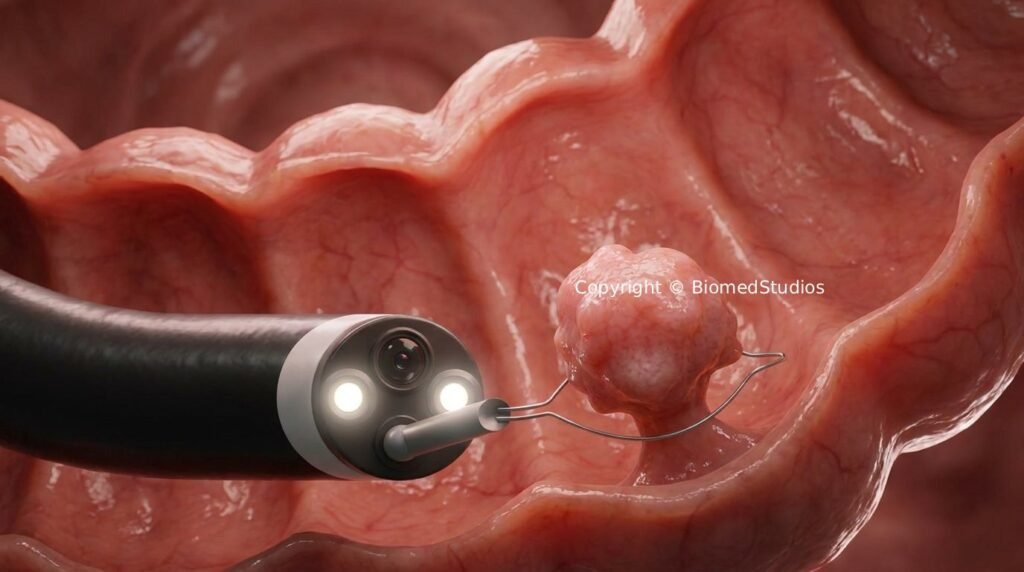
Colonoscopy is a medical procedure that uses a flexible camera to examine the inner lining of the colon and rectum. It allows doctors to detect abnormalities such as polyps, inflammation, bleeding, or cancer.
First, the procedure involves inserting a thin, flexible tube called a colonoscope through the rectum. This device has a light and camera that sends real-time images to a screen. For example, doctors can spot tiny growths (polyps) that wouldn’t show up in basic tests.
Second, colonoscopy is used for both screening and diagnosis. Screening helps detect disease early, while diagnostic colonoscopy investigates symptoms like bleeding or chronic diarrhea. For example, someone with unexplained abdominal pain may undergo colonoscopy to identify the cause.
Moreover, colonoscopy is part of standard [Internal link: “digestive system explained” → anatomy guide] learning because it directly visualizes the lower gastrointestinal tract.
Why Is Colonoscopy Important for Cancer Prevention?
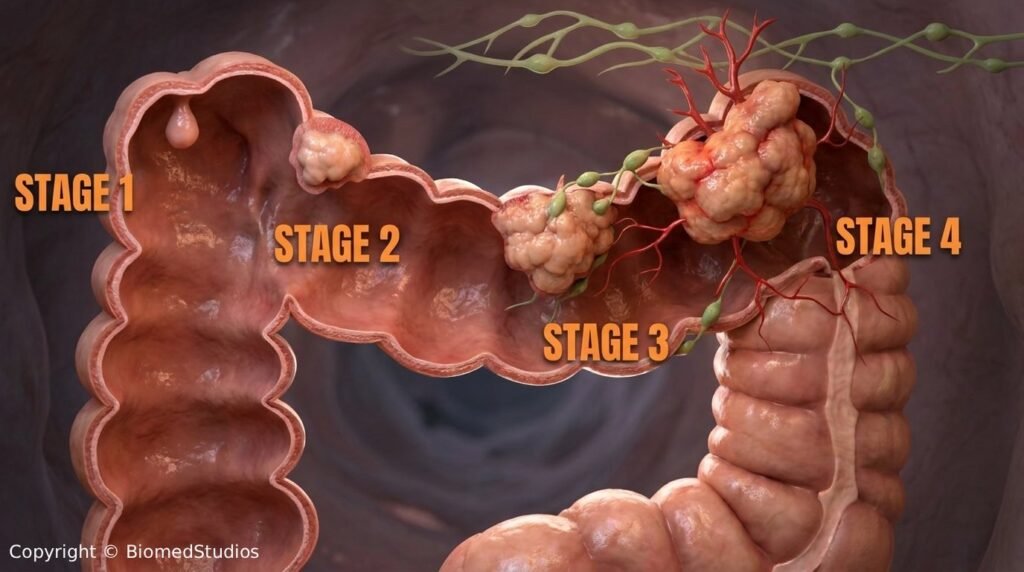
Colonoscopy is important because it can detect and prevent colorectal cancer by identifying and removing precancerous polyps.
First, colorectal cancer is one of the leading causes of cancer deaths worldwide. Early detection dramatically improves survival rates. For example, the 5-year survival rate exceeds 90% when detected early — Source: American Cancer Society, 2024.
Second, colonoscopy is unique because it is both diagnostic and preventive. During the same procedure, doctors can remove polyps before they turn cancerous. This is why it’s considered a gold-standard screening tool.
Third, guidelines recommend screening starting at age 45 for average-risk individuals. For example, studies show colonoscopy reduces colorectal cancer mortality by up to 68% — Source: National Cancer Institute, 2023.
In addition, understanding [Internal link: “how polyps turn into cancer” → polyp progression article] helps you see why early removal matters.
How Do You Prepare for a Colonoscopy Step by Step?
Colonoscopy preparation involves cleansing the bowel to ensure clear visualization of the colon. Without proper preparation, doctors may miss important findings.
Diet Restrictions Before the Procedure
First, patients are advised to switch to a low-fiber diet 2–3 days before the test. Then, they move to clear liquids the day before.
For example, acceptable foods include:
- Clear broth
- Tea or coffee (without milk)
- Gelatin
This step ensures the colon is free of solid waste.
Bowel Preparation Process
Second, patients take a prescribed laxative solution to empty the colon. This usually happens the evening before and sometimes the morning of the procedure.
For example, you may drink 2–4 liters of a solution that triggers frequent bowel movements. While uncomfortable, this step is critical for accuracy.
Moreover, poor prep can reduce detection rates by up to 42% — Source: Gastrointestinal Endoscopy Journal, 2022.
What Patients Typically Experience
Third, most people experience frequent diarrhea, mild cramps, and fatigue during prep. However, these symptoms are temporary.
In addition, following a structured guide like [Internal link: “how to prepare for medical procedures” → general prep guide] can make the process easier and less stressful.
What Happens During a Colonoscopy Procedure?
A colonoscopy procedure typically takes between 20 and 45 minutes and is performed under sedation.
Sedation and Comfort
First, doctors administer sedation through an IV to help you relax or sleep. Most patients do not remember the procedure.
For example, conscious sedation allows you to respond if needed, while deeper sedation puts you fully asleep.
Moreover, learning about [Internal link: “understanding sedation in medical procedures” → sedation guide] can reduce anxiety significantly.
Step-by-Step Procedure Process
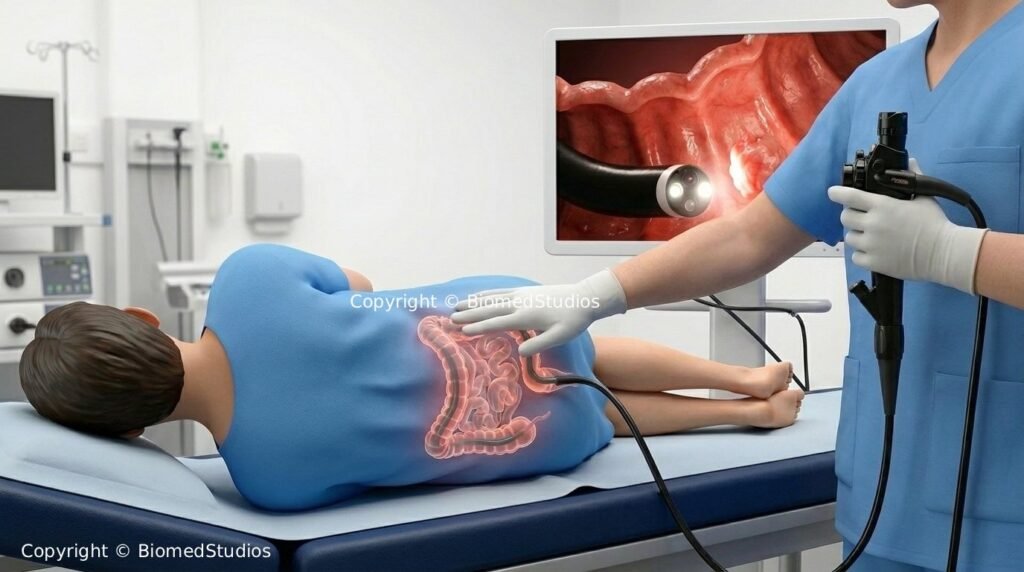
Second, the doctor inserts the colonoscope through the rectum and slowly advances it through the colon.
Step-by-step:
- Air or CO₂ is introduced to expand the colon
- The camera captures detailed images
- Abnormalities are identified
For example, a small polyp can be detected and removed instantly.
Polyp Removal and Biopsy
Third, doctors can remove polyps using tiny instruments passed through the scope. Tissue samples (biopsies) may also be taken.
This is crucial because polyp removal during colonoscopy helps prevent colorectal cancer by eliminating precancerous growths.
Does a Colonoscopy Hurt or Feel Uncomfortable?
A colonoscopy is usually painless because sedation minimizes discomfort during the procedure.
First, most patients report feeling nothing or only mild pressure. For example, sedation blocks pain perception, making the experience comfortable.
Second, some people feel bloating due to air introduced into the colon. However, this sensation fades quickly.
Studies show over 95% of patients report minimal or no pain — Source: Mayo Clinic, 2023.
How Long Does a Colonoscopy Take from Start to Finish?
A colonoscopy takes about 20–45 minutes for the procedure, but the entire visit may last 2–3 hours.
First, preparation and sedation setup take around 30–60 minutes. Then, the procedure itself is relatively quick.
Second, recovery from sedation adds another 30–60 minutes.
For example, although the scope is inside for less than an hour, total hospital time is longer due to monitoring.
What Happens Immediately After a Colonoscopy?
After a colonoscopy, patients are monitored in a recovery area until the effects of sedation wear off.
First, you may feel groggy or sleepy. For example, sedation can affect memory and coordination temporarily.
Second, doctors often provide initial findings right away. If polyps were removed, you’ll be informed.
Third, you must arrange for someone to drive you home due to lingering sedation effects.
In addition, following [Internal link: “post-procedure recovery tips” → recovery checklist] ensures a smoother recovery.
What Are Normal Symptoms After a Colonoscopy?
Mild bloating, gas, and slight discomfort are normal symptoms after a colonoscopy.
First, bloating occurs due to air used during the procedure. For example, passing gas helps relieve this quickly.
Second, minor cramping or fatigue may occur. These symptoms usually resolve within 24 hours.
Warning Signs to Watch For
However, serious symptoms are rare but require immediate attention:
- Severe abdominal pain
- Heavy bleeding
- Fever
Complication rates are low, around 0.1–0.3% — Source: American Society for Gastrointestinal Endoscopy, 2022.
What Are the Risks and Complications of a Colonoscopy?
Colonoscopy is generally safe, but like any medical procedure, it carries small risks.
First, common side effects include mild discomfort and temporary bloating.
Second, rare complications include:
- Bleeding after polyp removal
- Perforation (tear in the colon wall)
- Reaction to sedation
For example, perforation occurs in about 1 in 1,000 procedures — Source: BMJ, 2021.
Despite these risks, colonoscopy remains one of the safest and most effective screening tools.
Tools, Technology, and Real-Life Examples in Colonoscopy
Modern colonoscopy uses advanced imaging technology to improve accuracy and detection rates.
First, high-definition cameras provide detailed views of the colon lining. For example, doctors can detect tiny lesions just a few millimeters in size.
Second, technologies like narrow-band imaging enhance visualization of abnormal tissue.
Real-Life Example
For example, a patient undergoing routine screening may have a small polyp detected and removed in minutes. This simple action can prevent cancer years later.
| Technology | Function | Benefit |
| HD Colonoscope | High-resolution imaging | Detects small polyps |
| Narrow-band imaging | Enhances tissue contrast | Improves diagnosis |
| CO₂ insufflation | Expands colon | Reduces discomfort |
When Should You Get Your Next Colonoscopy?
The timing of your next colonoscopy depends on your results, age, and risk factors.
First, if no abnormalities are found, screening is typically repeated every 10 years.
Second, if polyps are detected, follow-up may be needed in 3–5 years.
For example, individuals with a family history of colorectal cancer may require earlier and more frequent screening.
In addition, reviewing [Internal link: “colorectal cancer screening guidelines” → screening age guide] helps determine your schedule.
What Should You Do Next After a Colonoscopy?
After a colonoscopy, you should follow medical advice, monitor symptoms, and plan future screenings.
First, follow your doctor’s recommendations based on results. For example, biopsy results may take a few days.
Second, adopt lifestyle changes to improve colon health:
- Eat fiber-rich foods
- Exercise regularly
- Avoid smoking
For example, following a [Internal link: “healthy diet for colon health” → nutrition guide] can reduce future risks.
Third, consult a specialist if needed. Knowing [Internal link: “when to see a gastroenterologist” → consultation guide] ensures timely care.
Conclusion
Colonoscopy is a safe, effective, and potentially life-saving procedure that detects and prevents serious diseases early.
You now understand exactly what happens before, during, and after a colonoscopy—from preparation to recovery. That clarity removes fear and replaces it with confidence.
If you’ve been delaying your screening, this is your sign to act. Early detection doesn’t just improve outcomes—it can save your life.
Written by KABS Kariyapperuma, BPharm (Hons), MSc Applied Organic Chemistry — in medical science communication and pharmaceutical research
Reviewed by Medical Content Review Team — in gastroenterology and clinical accuracy
Disclaimer: This article was initially drafted using AI assistance. However, the content has undergone thorough revisions, editing, and fact-checking by human editors and subject matter experts to ensure accuracy.