
Rectal Cancer and Early Diagnosis:Symptoms, Screening, and Survival
Summarize this blog post with: ChatGPT | Perplexity | Claude | Grok
You probably know that cancer is more treatable when caught early. But many people miss the subtle early signs of rectal cancer or delay screening until it’s too late. In this guide, you’ll learn how to recognize early symptoms, understand screening options, and take proactive steps toward early diagnosis.
Key Takeaways
● Rectal cancer is a type of colorectal cancer that begins in the rectum and can often be treated successfully if detected early.
● Early diagnosis significantly improves survival rates and allows for less invasive treatment options.
● Common early symptoms include rectal bleeding, changes in bowel habits, and unexplained fatigue.
● Screening methods such as colonoscopy and stool tests are essential for detecting rectal cancer before symptoms appear.
● Risk factors include age, family history, diet, and lifestyle habits such as smoking and inactivity.
● Regular screening starting at recommended ages is one of the most effective ways to prevent advanced disease.
● Prompt medical evaluation of symptoms can lead to earlier diagnosis and better outcomes.
What Is Rectal Cancer and How Does It Develop?
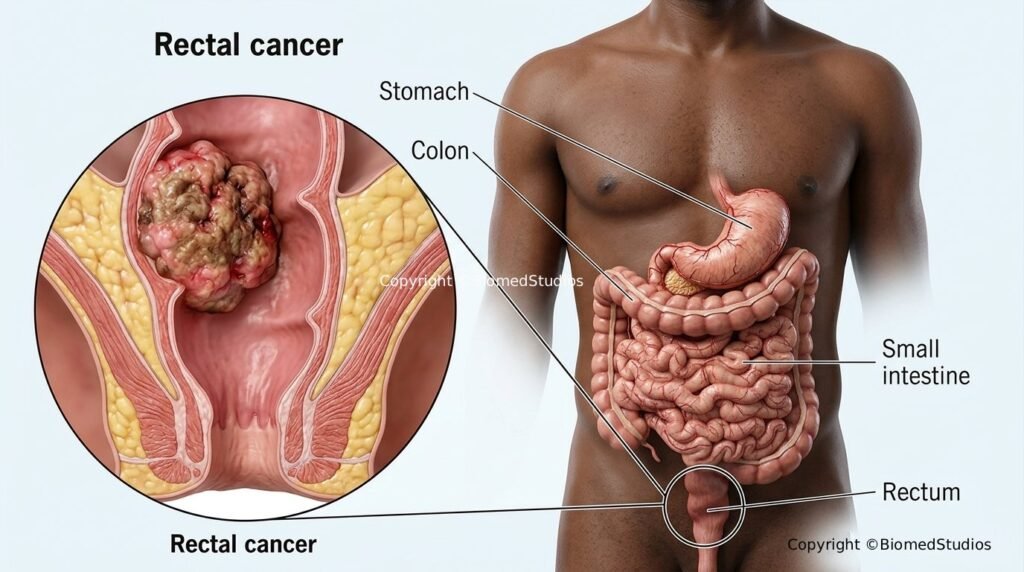
Rectal cancer is a type of cancer that begins in the rectum, the final section of the large intestine. It forms when cells in the rectal lining grow uncontrollably and develop into tumors.
First, the rectum is located at the end of your digestive tract, just before the anus. It stores stool before elimination. For example, when you feel the urge to have a bowel movement, that signal originates from the rectum.
Second, rectal cancer is often grouped with colon cancer under the term colorectal cancer, but they are not identical. The difference matters because treatment approaches and surgical techniques vary based on location.
Moreover, rectal cancer usually begins as small, non-cancerous growths called polyps. Over time, some polyps may become cancerous. For example, adenomatous polyps can gradually transform into malignant tumors if left untreated.
Rectal cancer develops slowly, which makes early detection highly achievable through screening.
[Internal link: “early cancer detection strategies” → suggested target page/topic]
Why Is Early Diagnosis of Rectal Cancer So Important?
Early diagnosis of rectal cancer significantly increases survival rates and expands treatment options. Detecting cancer before it spreads allows for simpler and more effective treatments.
First, survival rates are dramatically higher in early stages. For example, localized colorectal cancer has a 5-year survival rate of about 90% — Source: American Cancer Society, 2024.
Second, early-stage cancers often require less aggressive treatment. This means patients may avoid extensive surgery, chemotherapy, or radiation. For example, small tumors can sometimes be removed during a colonoscopy.
Moreover, early detection reduces complications. Advanced rectal cancer can spread to nearby organs or lymph nodes, making treatment more complex and recovery longer.
Screening saves lives because it identifies cancer before symptoms appear.
- About 1 in 24 people will develop colorectal cancer — Source: National Cancer Institute, 2023
- Screening can reduce mortality by up to 60% — Source: CDC, 2022
[Internal link: “early cancer detection strategies” → cancer prevention guide]
What Are the Early Signs and Symptoms of Rectal Cancer?
Early signs of rectal cancer include rectal bleeding, changes in bowel habits, and persistent abdominal discomfort. These symptoms are often mild and easily overlooked.
Common Early Symptoms
First, rectal bleeding is one of the most noticeable signs. For example, you may see bright red blood in your stool or on toilet paper.
Second, changes in bowel habits can signal underlying issues. For example:
- Persistent diarrhea or constipation
- Narrow or ribbon-like stools
- Feeling that the bowel doesn’t empty completely
Third, fatigue and weakness may occur due to slow blood loss and anemia. For example, you may feel unusually tired despite adequate rest.
Moreover, unexplained weight loss or abdominal pain may appear as the disease progresses.
Rectal bleeding should never be ignored, even if you suspect hemorrhoids.
[Internal link: “common digestive health symptoms” → digestive health guide]
Who Is Most at Risk for Rectal Cancer?
Risk factors for rectal cancer include age, genetics, lifestyle habits, and medical history. Understanding these risks helps you take preventive action.
Major Risk Factors
First, age is the strongest risk factor, with most cases occurring after 45. For example, screening guidelines now recommend starting at age 45 for average-risk adults.
Second, family history increases risk significantly. For example, having a first-degree relative with colorectal cancer doubles your risk.
Third, lifestyle factors play a major role:
- Diet high in red or processed meat
- Low fiber intake
- Smoking and alcohol use
- Physical inactivity
Moreover, conditions like inflammatory bowel disease (IBD) also raise risk.
- About 75% of colorectal cancer cases occur in people with no known genetic risk — Source: WHO, 2023
Family history and cancer risk should always guide your screening schedule.
[Internal link: “family history and cancer risk” → genetic risk article]
How Is Rectal Cancer Diagnosed in Its Early Stages?
Rectal cancer is diagnosed early using screening tests, imaging, and biopsy to confirm abnormal findings. These methods help detect cancer before symptoms become severe.
Key Diagnostic Methods
First, a colonoscopy is the gold standard. It allows doctors to view the entire colon and rectum and remove polyps during the procedure.
Second, biopsy confirms cancer diagnosis. For example, a small tissue sample is examined under a microscope to detect cancer cells.
Third, imaging tests such as:
- MRI
- CT scans
- Endorectal ultrasound
help determine the extent of cancer spread.
Understanding Cancer Stages
Stages of rectal cancer describe how far the cancer has spread.
| Stage | Description | Treatment Outcome |
|---|---|---|
| Stage 0 | Cancer in inner lining | Highly curable |
| Stage I | Limited to rectum | Excellent survival |
| Stage II | Spread to outer layers | Treatable |
| Stage III | Spread to lymph nodes | Requires combined therapy |
| Stage IV | Distant spread | Complex treatment |
- Early-stage detection improves survival by 2–3 times — Source: Lancet Oncology, 2022
[Internal link: “understanding cancer stages” → cancer staging article]
What Screening Tests Detect Rectal Cancer Early?
Rectal cancer screening involves tests such as colonoscopy and stool-based tests to detect abnormalities before symptoms appear.
Common Screening Tests
First, colonoscopy is the most comprehensive test. It detects and removes precancerous polyps in one procedure.
Second, stool-based tests check for hidden blood or abnormal DNA:
- Fecal Immunochemical Test (FIT)
- Stool DNA test
Third, flexible sigmoidoscopy examines only the lower colon and rectum.
Regular screening starting at age 45 is recommended for average-risk individuals to detect colorectal cancers early.
Screening Comparison Table
| Test Type | Frequency | Detects Polyps | Preparation |
|---|---|---|---|
| Colonoscopy | Every 10 years | Yes | Full prep required |
| FIT Test | Annually | No | Minimal |
| Stool DNA | Every 3 years | Sometimes | Minimal |
[Internal link: “types of colorectal cancer screening tests” → screening comparison guide]
[Internal link: “colonoscopy preparation tips” → colonoscopy prep article]
At What Age Should You Start Screening for Rectal Cancer?
Screening for rectal cancer should begin at age 45 for average-risk individuals. Earlier screening may be necessary for those with higher risk.
First, people with a family history or genetic conditions should start earlier, sometimes in their 30s or 40s.
Second, individuals with chronic digestive diseases require more frequent monitoring.
- Screening rates increased early detection by 30% in adults over 50 — Source: CDC, 2023
Starting screening at the right time can prevent cancer before it develops.
Can Rectal Cancer Be Detected Before Symptoms Appear?
Rectal cancer can often be detected before symptoms appear through routine screening tests. This is why screening is critical even if you feel healthy.
First, precancerous polyps can exist for years without causing symptoms. For example, a colonoscopy can identify and remove these growths early.
Second, stool tests can detect microscopic blood invisible to the naked eye.
Early detection without symptoms is the key to prevention, not just treatment.
What Happens After an Early Rectal Cancer Diagnosis?
After an early rectal cancer diagnosis, treatment typically involves surgery and may include radiation or chemotherapy.
First, early-stage cancers are often treated with minimally invasive surgery. For example, local excision may remove small tumors without major surgery.
Second, recovery is generally faster, and long-term outcomes are better.
Third, follow-up care includes regular screenings to monitor recurrence.
[Internal link: “what to expect after a cancer diagnosis” → patient support guide]
How Can You Reduce Your Risk of Rectal Cancer?
You can reduce your risk of rectal cancer by adopting healthy lifestyle habits and staying consistent with screening.
Prevention Strategies
First, follow a healthy diet for cancer prevention:
- High in fruits, vegetables, and fiber
- Low in processed and red meats
Second, maintain regular physical activity. For example, 30 minutes of exercise daily can reduce cancer risk.
Third, avoid smoking and limit alcohol intake.
Fourth, stay consistent with screening schedules.
- Lifestyle changes can reduce colorectal cancer risk by up to 40% — Source: World Cancer Research Fund, 2022
Lifestyle changes to reduce cancer risk are one of the most effective preventive strategies.
[Internal link: “healthy diet for cancer prevention” → nutrition guide]
[Internal link: “lifestyle changes to reduce cancer risk” → wellness article]
Tools and Practical Applications for Early Detection
Early detection tools for rectal cancer include colonoscopy, stool tests, and imaging technologies that help identify abnormalities quickly.
First, you can use hospital or clinic-based systems to schedule screenings and track results. For example, many healthcare providers offer digital dashboards for reminders.
Second, at-home stool test kits provide a convenient option for initial screening.
Suggested Visuals:
- [Insert image: Colonoscopy procedure overview | Alt text: “Understand colonoscopy for rectal cancer screening”]
- [Insert image: Stool test kit example | Alt text: “Use stool test for early cancer detection”]
- [Insert image: Rectum anatomy diagram | Alt text: “Visualize rectal cancer development in rectum”]
Moreover, a custom diagram showing polyp-to-cancer progression would enhance understanding.
What Should You Do Next If You’re Concerned?
If you notice symptoms or fall into a risk group, you should consult a doctor and schedule appropriate screening tests.
Action Steps
- Monitor symptoms like bleeding or bowel changes
- Book a screening test if you’re over 45
- Discuss your family history with a doctor
- Prepare for tests using proper guidelines
Questions to Ask Your Doctor:
- What screening test is right for me?
- How often should I get screened?
- What do my symptoms indicate?
[Internal link: “when to see a doctor for symptoms” → symptom checklist article]
Conclusion
Rectal cancer is highly treatable when detected early, making awareness and screening essential. By recognizing symptoms, understanding risk factors, and following screening guidelines, you can take control of your health.
Early action saves lives. Don’t wait for symptoms to worsen—schedule screening, stay informed, and prioritize prevention today.
Written by KABS Kariyapperuma, BPharm (Hons), MSc Applied Organic Chemistry — Expert in pharmaceutical sciences and medical education
Reviewed by Medical Content Review Team — in oncology and preventive healthcare
Disclaimer: This article was initially drafted using AI assistance. However, the content has undergone thorough revisions, editing, and fact-checking by human editors and subject matter experts to ensure accuracy.