LASIK Eye Surgery: How It Works in Seconds
LASIK reshapes the cornea using an excimer laser to correct refractive errors such as short-sightedness, long-sightedness and astigmatism. A thin flap is created, the underlying cornea is reshaped, and the flap is replaced. Most patients notice improved vision within days.
By BiomedStudiosReviewed by Buddhi Sandaras Kariyapperuma, clinical pharmacist1 min read
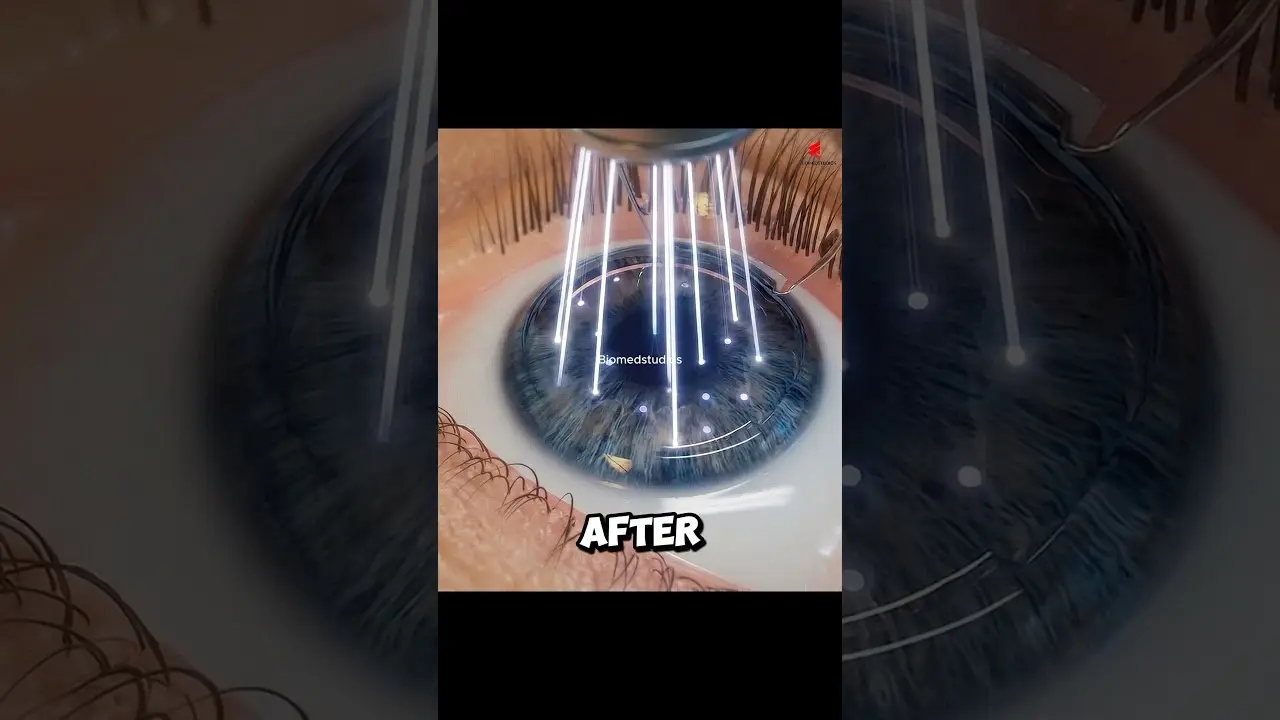 Watch the animation · 0:37
Educational information. Symptoms, treatment and recovery need advice from a qualified clinician.
The LASIK procedure
This Biomedstudios Short animates the LASIK process. A flap is created in the corneal surface, the laser removes precise amounts of tissue underneath, and the flap is repositioned. The FDA explains LASIK, its benefits and risks.
Candidacy and considerations
Stable refraction, adequate corneal thickness and healthy eyes are prerequisites. Not everyone is suitable. The Mayo Clinic describes LASIK candidacy and potential complications.
Common questions
Is LASIK permanent?
The corneal reshaping is permanent, but age-related changes like presbyopia still occur. Some patients may need reading glasses later.
Is the procedure painful?
Anesthetic drops numb the eye. Most patients feel pressure but not pain during the brief procedure.