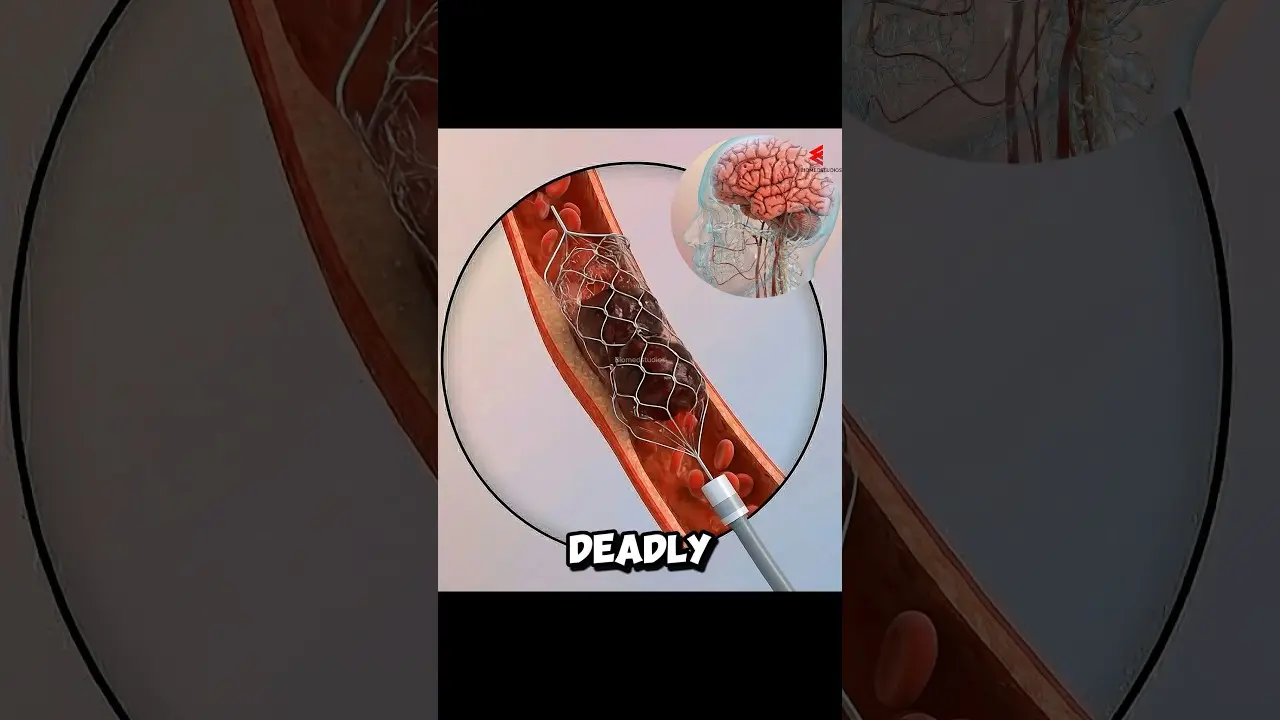
What Happens During a Stroke and How Brain Clots Are Removed
An ischemic stroke occurs when a blood clot blocks an artery supplying the brain, starving tissue of oxygen. Mechanical thrombectomy uses a device threaded through blood vessels to retrieve the clot. Recognizing stroke symptoms using the FAST method and calling emergency services immediately is critical.
By BiomedStudiosReviewed by Buddhi Sandaras Kariyapperuma, clinical pharmacist2 min read
 Watch the animation · 2:05
Educational information. Symptoms, treatment and recovery need advice from a qualified clinician.
How a stroke damages the brain
The Biomedstudios video shows how a clot in a brain artery blocks blood flow, causing brain cells to die within minutes. The area of damage depends on which artery is blocked and how quickly blood flow is restored. Every minute counts.
The American Stroke Association explains ischemic stroke and the importance of rapid treatment. The FAST acronym helps: Face drooping, Arm weakness, Speech difficulty, Time to call emergency services.
How clot removal works
Mechanical thrombectomy involves threading a catheter through an artery to the brain clot and using a stent-retriever or aspiration device to extract it. The procedure is performed in specialized stroke centers and is most effective within hours of symptom onset. The Mayo Clinic describes stroke treatments including thrombectomy.
Not every stroke patient is eligible for thrombectomy. Treatment depends on the type, location and timing of the stroke, as well as the patient's overall condition.
Prevention and recovery
Managing blood pressure, atrial fibrillation, cholesterol, diabetes and smoking reduces stroke risk. After a stroke, rehabilitation addresses mobility, speech and daily function. Recovery varies widely among individuals.
Common questions
Is every stroke treated with clot removal?
No. Thrombectomy is for specific large-vessel ischemic strokes within a treatment window. Other strokes may receive clot-dissolving medication or supportive care.
Can you fully recover from a stroke?
Recovery varies. Early treatment, rehabilitation and managing risk factors improve outcomes, but some people experience lasting effects.