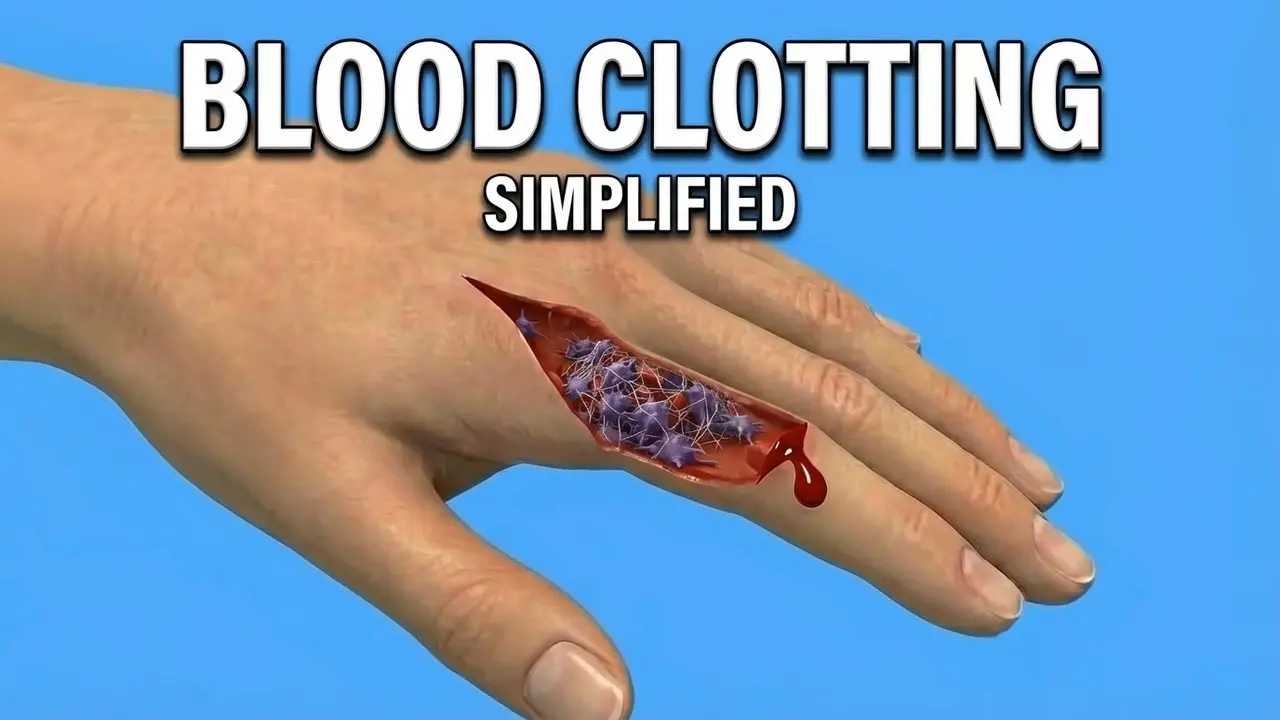
How Blood Clotting Works: Medical Animation
This short medical animation by Biomedstudios visualizes the hemostasis process: platelets adhere to a damaged vessel, activate and aggregate, while the coagulation cascade produces fibrin to stabilize the clot. Understanding this process helps explain how clotting disorders and anticoagulant medicines work.
By BiomedStudiosReviewed by Buddhi Sandaras Kariyapperuma, clinical pharmacist2 min read
 Watch the animation · 0:42
Educational information. Symptoms, treatment and recovery need advice from a qualified clinician.
Visualizing the clotting process
The Biomedstudios animation condenses the complex hemostasis process into a brief visual sequence. When a vessel is injured, platelets detect exposed collagen and begin the repair process. They change shape, release signaling chemicals and recruit additional platelets.
The NHLBI explains normal blood clotting and what happens when the process goes wrong.
From platelet plug to stable clot
The coagulation cascade involves a series of protein activations that culminate in thrombin generation. Thrombin converts fibrinogen into fibrin strands that weave through and reinforce the platelet plug. The American Society of Hematology explains blood clots for patients.
This process must be balanced. Inadequate clotting causes bleeding disorders. Excessive clotting causes thrombosis, which can lead to stroke, heart attack or pulmonary embolism.
Common questions
Why do some people clot too easily?
Genetic conditions, certain medications, immobility and other medical conditions can shift the balance toward excessive clotting.
How do blood thinners relate to this process?
Anticoagulants target specific steps in the cascade. Antiplatelet drugs reduce platelet activation. Both are used to prevent unwanted clots.