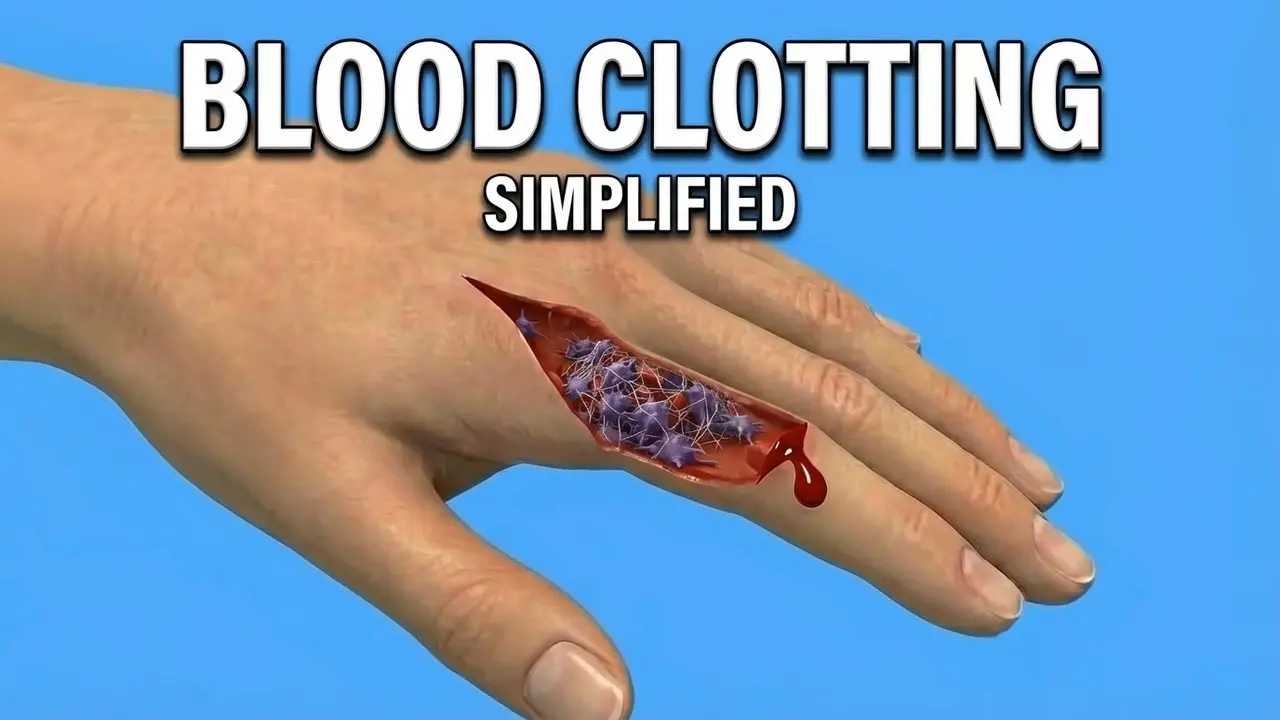
Platelet Activation and Clotting Factors: Quick Animation
This Short shows platelet activation at a vessel injury site. Platelets change shape, release chemical signals and recruit more platelets. Simultaneously, clotting factors activate in a cascade that produces thrombin and fibrin, creating a stable, reinforced clot.
By BiomedStudiosReviewed by Buddhi Sandaras Kariyapperuma, clinical pharmacist1 min read
 Watch the animation · 0:47
Educational information. Symptoms, treatment and recovery need advice from a qualified clinician.
The activation cascade
The Biomedstudios Short animates the moment platelets contact an injured vessel wall. Collagen exposure triggers platelet adhesion and activation. Released chemicals attract more platelets, while the coagulation cascade generates fibrin. The NHLBI explains normal and abnormal clotting.
Clinical relevance
Understanding platelet activation explains how antiplatelet drugs like aspirin and clopidogrel work. The ASH provides patient education on blood clots.
Common questions
Can you have too many or too few platelets?
Yes. Thrombocytopenia (too few) increases bleeding risk. Thrombocytosis (too many) can increase clotting risk. Both require medical evaluation.